On February 6, Syrian freight truck owners and drivers mounted a national strike and organized demonstrations on key road arteries across the country.1 Protesting truckers accosted drivers who failed to adhere to the strike and, in al-Raqqa governorate, assaulted several Jordanians.2 Their demand: that the new Syrian government restore protections for the domestic trucking industry that it had removed as part of its broader liberalization agenda.
“We’re with this country, and we hope for security and stability in this country,” said one protesting trucker, addressing President Ahmed al-Sharaa, in a video posted to social media. “But we’re going hungry, and we want to feed our children.”3
The strike, which briefly brought trucking on Syria’s highways to a standstill, offered a microcosm of the deep challenges facing postwar Syria. The country’s economy is no longer in wartime free fall, but it remains in deep crisis. Syria’s transitional government has attempted to restart growth with its liberalizing economic program. Yet these open-market policies have left certain groups behind, including small-operator truck owners and drivers who complained that the government’s partial deregulation of freight shipping was putting them out of work—and some of those groups have fought back.
How to manage freight trucking is just one of myriad difficult choices facing the Sharaa government. Syrian rebels led by Sharaa’s Islamist militant group toppled dictator Bashar al-Assad in December 2024. Those former rebels have been working since to build a new, post-Assad political order—but the country, after fourteen years of war, is exhausted. Its physical capital—including its aging trucking fleet—is in shambles. The World Bank has estimated that the civil war dealt $108 billion in damage to Syria’s infrastructure and building stock.4 Now, across many sectors and regions, the government is forced to allocate scarce resources while managing socioeconomic constituencies with opposed interests. And at the same time, the ex-rebels in government are still finding their political and administrative footing—figuring out, for example, how to combine structures linked to Sharaa’s past armed faction with Syria’s preexisting state institutions.
Syria’s situation is exceptional—rising, as it is, from a half century of authoritarian rule and a devastating civil war—but some of the dilemmas facing the Sharaa government are familiar, and common to other emerging economies around the world: What is the best way to orient the country economically, to achieve growth that broadly benefits the country’s people? How can gains be distributed among rival economic constituencies, and how can the requirements of economic recovery be balanced against the demands of domestic interest groups? How can life be made materially better for ordinary Syrians, or for as many Syrians as possible?
The February strike only lasted a day. The Sharaa government abruptly acceded to truckers’ key demands, re-empowering a decades-old regulatory structure and imposing protectionist restrictions on international shipping. Yet that wasn’t the end of the story—in practice, the government’s clumsy implementation of its policy reversal scrambled trade at the country’s borders, and Syrian officials have since been contending with opposition from the country’s business community and foreign trade partners.
This report—based on more than a dozen interviews with representatives from Syrian truckers’ associations, Syrian businessmen, Syrian officials, Western diplomats, and others, in addition to news reports and social media—tells the story of the ongoing fight over Syrian trucking, and shows why Syria’s new leaders will struggle to deliver real prosperity.
A Crucial Decision
The key inflection point in Syria’s ongoing policy debate over freight trucking was the General Authority for Ports and Customs’ Decision 31, issued early on February 7.5
Syrian truckers had launched their strike less than twenty-four hours earlier. Apparently, the scenes of protesting truckers blocking highways and attacking strikebreakers’ trucks were convincing: at 2 a.m. Damascus time, Syria’s General Authority for Ports and Customs published a decision that satisfied truckers’ top demands. The General Authority’s Decision 31 included two major provisions. First, it required commercial trucks entering Syria’s border crossings and port facilities to present a receipt from a Syrian Ministry of Transport freight office; and second, it prohibited foreign trucks from entering Syrian territory—with the exception of transit trade, through Syria—and required those trucks to transfer their cargos to Syrian vehicles at the border.
This decision restored the past role of the Ministry of Transport’s freight offices, more generally known as maktab al-dour (literally, “the rotation office”). Maktab al-dour is a decades-old government institution, originally created in 1960s legislation.6 Its authority had been curtailed under Syria’s new transitional government for almost a year. Traditionally, the office had registered arriving trucks and assigned them cargos in order of arrival, ensuring that small operators have the same access to cargos as large shipping companies. Each governorate has its own maktab al-dour for freight traffic. Trucks carrying other types of cargo answer to equivalent offices; fuel tankers, for example, work under a single national office belonging to the Ministry of Energy.
Decision 31 also met truckers’ demand to limit foreign drivers’ access to the Syrian freight market by mandating “back-to-back” trans-loading of cargo at Syria’s land borders. The General Authority measure affected Syria’s border crossings with Lebanon and Jordan; cargo was already being trans-loaded at Syria’s borders with Turkey and Iraq.7
Truck owners and drivers praised the General Authority’s decision, which they said would put thousands of vehicles back to work.8 Now, Syrian trucks could pick up cargo every few days, border officials and drivers said, instead of every few weeks or months.9 Syrian state media promoted the decision, highlighting appreciative drivers.10
Yet the implementation of Decision 31 proved chaotic. Syrian authorities had given little advance indication of this dramatic policy shift, and Lebanese and Jordanian shippers and officials were evidently blindsided.11 The Syrian Ministry of Transport only issued a statement on the decision days later, even though it affected the ministry’s freight offices.12
Decision 31 gave Syria’s truckers what they had been asking for. But that wasn’t the end of the policy argument.
Truckers Make Their Demands
Truck owners and drivers’ mobilization culminated in their February strike, but they had been pushing several key policy concerns for the better part of a year.
First, truck owners and drivers were angry that the Sharaa government had substantially diminished the role of maktab al-dour. Syria’s new authorities had continued to mandate that maktab al-dour manage public sector cargo, such as flour and wheat.13 Since early 2025, though, the government had embraced “freedom of transport” for private sector cargo—allowing unmediated access by private companies’ trucks, outside the maktab al-dour framework.14 In August 2025, a Ministry of Transport official said that only 8,000 freight trucking vehicles out of a national fleet of 31,000 were working under maktab al-dour.15 Truckers said the government’s policy change had benefited traders at their expense, and that it had empowered middlemen who reserved cargo for large shipping companies or dictated exploitative terms to small operators.16
“Maktab al-dour is still there, but it’s nonfunctioning,” said Haitham Rahhal, the head of the Homs Freight Truck Drivers’ Association, in January.17
Second, even as the Sharaa government had opened Syria to foreign trade, Syrian truckers weren’t benefiting. They were mostly shut out of international shipping, both because of difficulties securing visas from regional countries and because countries required incoming trucks to be no more than fifteen or twenty years old.18 Syria’s trucking fleet is aging; Ministry of Transportation media representative Abdulhadi Shehadeh said that about 70 percent of Syria’s fleet is more than fifteen years old.19 Yet Syria’s truckers had suffered fourteen years of civil war and economic dislocation, during which they could hardly invest in new vehicles. Truckers were frustrated, then, seeing foreign drivers deliver cargo to Syria while Syrians with older vehicles were effectively barred from entering those same countries.
In July 2025, the General Authority for Ports and Customs had barred vehicles from Egypt and Saudi Arabia from entering Syria, in what it said was a response to those countries’ refusal to admit Syrian trucks.20 Yet other vehicles, including from Jordan, had continued to deliver cargo to Syria.
“People sold their land, sold their cows, sold their sheep—they bought a vehicle for $50,000, $100,000. And now they’re just sitting around, thanks to ‘freedom of transport.’”
The Syrian Ministry of Transport has been developing legislation to modernize the Syrian trucking fleet, which would enable newer vehicles to enter neighboring countries.21 “It’s no longer okay for our citizens to enter [these countries] in a way that’s not dignified,” Shehadeh said.22 Yet owners and drivers have worried that new legislation will force them to replace their vehicles at their own expense, or incur fines.23 Nidhal Ageidi, an activist in Homs governorate who has used social media to amplify local truckers’ protests, said these modernization plans might be implementable in five years, but are not realistic at the moment. “These are standards for an existing state, not one that’s just emerging from a war,” he said. “These are for Jordan or Saudi Arabia, not here.”24
Small-operator truck owners and drivers, in particular, felt that the Syrian transitional government’s policies had harmed them. This sense was particularly acute in towns such as Talbiseh and al-Rastan in northern Homs, where many locals work in trucking and families frequently pool money to jointly purchase a truck.25 “Brother, these vehicles have four, five families relying on them,” an older Homs driver told Ageidi at a September protest. “How are people supposed to live?”26 The number of people whose livelihoods depend on trucking is even greater, Rahhal said, when one accounts not only for owners and drivers but also electricians, parts retailers, oil suppliers, and others. “You have 75,000 people living off of 2,000 vehicles,” he said.27
With the Sharaa government’s new policies, truckers who wanted to return to work after more than a decade of war—in which Syria’s economy contracted, trade routes were severed, and drivers were abducted and had their vehicles stolen—said the new government’s policies meant they couldn’t get enough work to maintain their trucks, or to support the families who depended on them.
As another Homs trucker told Syria TV: “There are people who went and bought vehicles for $50,000, $70,000, $100,000—they bought them thinking that, praise God, after the [country’s] liberation, things would get better. So, they took their money—people who sold their land, sold their cows, sold their sheep—they bought a vehicle. And now they’re just sitting around, thanks to ‘freedom of transport.’”28
Truckers’ Struggle to Be Heard
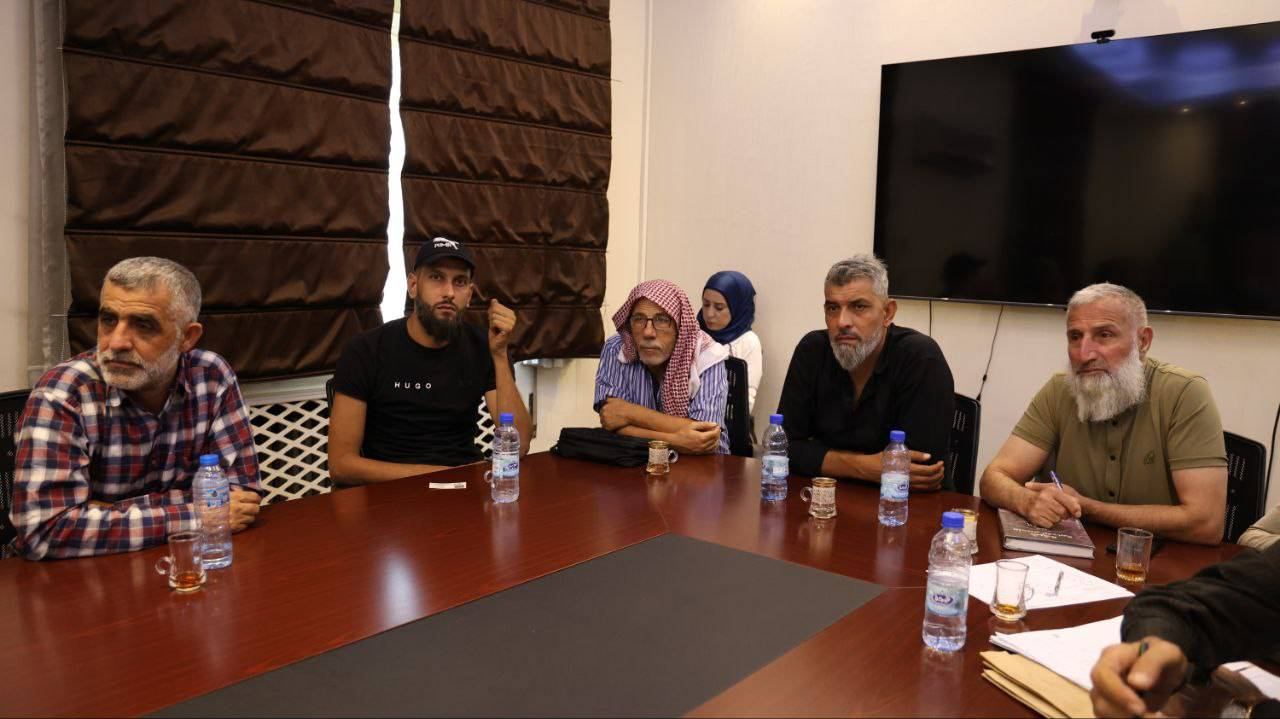
Freight truck owners and drivers had been trying to raise their concerns to Syrian authorities for nearly a year—with little success.
Freight truckers had protested several times, including in April 2025 and again in September. The latter protests, in September, involved a multiday strike and nationwide demonstrations. Protesting truckers demanded the government expand the authority of maktab al-dour and cancel freedom of transport; some called for the removal of Minister of Transport Yarub Badr and General Authority for Ports and Customs head Quteiba Badawi. Some demonstrators apparently attacked drivers who broke the strike.
Ahead of the September protest, freight truckers’ main Facebook page framed the stakes: “To every truck owner and Syrian ground transport [worker]: if this protest fails and [our] demands aren’t met, you’ll end up selling your vehicles for scrap. The alternative is that all the Middle East’s vehicles are now ready to enter Syria and work; they just want a signal from the government, and from the Minister of Transport and the borders director [Badawi].”29
The September protests were defused when Badr and other top ministry officials met with truckers and heard their demands.30 Badr said he would convene another meeting that would include labor representatives and relevant state entities, including the General Authority for Ports and Customs.31 When truckers’ representatives returned to Damascus later that month, however, they could only get a meeting with Badr and his deputies.32 Maher al-Sharaa, secretary-general of the Syrian presidency and President Sharaa’s brother, convened a subsequent interministerial meeting to discuss freight shipping, but invited only senior government officials.33
Trucking representatives had already met with the Ministry of Transport, under whose authority they officially fall.34 Yet they had struggled to reach the newly created General Authority for Ports and Customs, and there was confusion about which entity was really able to address truckers’ demands. Formally, maktab al-dour remained under the Ministry of Transport’s purview,35 which Shehadeh, the ministry representative, affirmed; when the author had asked Shehadeh’s predecessor, though, he said the General Authority was responsible.36
In practice, the Ministry of Transport seemed incapable of resolving truckers’ concerns. Ministry representatives mainly emphasized a forthcoming online platform that would replace maktab al-dour, organizing freight shipping and distributing cargo in a fair way.37 For truckers, that wasn’t enough. “They’re thinking on the level of Europe,” said Rahhal, the Homs trucking representative. “But the country is on the level of Sudan.”38
In February, after months of government inaction, Syria’s truck owners and drivers decided to strike.39 When the General Authority for Ports and Customs then issued Decision 31, that apparently settled the question over which government body was responsible. It was the General Authority—by requiring a ticket from maktab al-dour to enter port and border facilities—that had effectively reestablished the office’s relevance.
The General Authority’s Expansive Powers
The General Authority for Ports and Customs is a new entity created by Syria’s post-Assad government in December 2024, initially as the “General Authority for Land and Sea Ports.”40 In November 2025, the Syrian presidency broadened the body’s remit and transformed it into the General Authority for Ports and Customs.41 The authority, since its inception, has been headed by Quteiba Badawi.42
Badawi is a close associate of Ahmed al-Sharaa. He was previously a veteran cadre in Sharaa’s armed faction, Hayat Tahrir al-Sham. Before Syrian rebels overran Damascus and seized power in December 2024, Badawi had managed the Bab al-Hawa border crossing linking Idlib governorate, which Hayat Tahrir al-Sham controlled, with neighboring Turkey. He had also handled trade crossings inside Syria and other economic responsibilities.43
The General Authority for Ports and Customs is a ministry-equivalent entity that answers directly to the Syrian presidency. It is exceptionally powerful. It has absorbed offices and functions that previously belonged to Syria’s Ministry of Transport, Ministry of Economy and Foreign Trade, and Ministry of Finance.44 Badawi regularly meets with senior foreign officials and diplomats to discuss trade cooperation. The General Authority maintains its own security force, the Customs Police, whose responsibilities include disrupting smuggling and escorting transit trade. The decree establishing the General Authority created an oversight office to scrutinize its work that “enjoys total independence in carrying out its responsibilities,” but that is also “directly answerable to the President of the Authority.”45 The General Authority did not respond to several requests for an interview.
How the General Authority’s expansive remit corresponds to the responsibilities of preexisting ministries is not always clear. Badawi has discussed matters with local and foreign officials, for example, that seem to overlap with the Ministry of Transport’s mandate.
The General Authority for Ports and Customs’ power was further enhanced in November 2025, when the Syrian president created the National Committee for Imports and Exports, led by Badawi.46 This interministerial committee has the authority to make major decisions on trade policy, including setting tariff rates and imposing import bans.
Decision 31’s Repercussions
While the General Authority for Ports and Customs’ Decision 31 satisfied Syrian freight truckers’ main demands, it also led to unintended consequences and opposition from other interest groups.47
“Decision 31 got the whole fleet moving, at every port and crossing,” Rahhal said. “Before, everyone was sitting around; there was no work, except rarely.” With Decision 31, “work opportunities improved a lot.”48
Yet Decision 31 also resulted, in its immediate aftermath, in chaos at Syria’s main border crossings with Jordan and Lebanon. Cargo accumulated for days at the crossing with Jordan; Syrian truckers had to put out urgent calls for drivers to come collect stranded cargo.49 At Syria’s main crossing with Lebanon, Lebanese drivers protested the Syrian decision by blocking the customs zone with their trucks.50 Both Jordanian and Lebanese officials reached out to Syrian counterparts to try to mitigate the decision’s impact, but Syrian officials resisted delaying Decision 31’s implementation or issuing exceptions.51
In Syria, meanwhile, the country’s business community vociferously objected to Decision 31. Freedom of transport had been good for Syria’s traders and manufacturers; the Damascus Chamber of Industry, for instance, had previously thanked the General Authority for “cancelling” maktab al-dour at Syria’s ports and permitting manufacturers’ trucks to enter.52 After Decision 31, Damascus’s chambers of commerce and industry mobilized to publicly oppose the move and to lobby against it in official meetings. They warned authorities the decision would result in congestion and delays at border crossings, damage to goods during trans-loading, and increased shipping costs that would drive up prices in Syrian markets. They also objected to how the decision went into immediate effect, with no prior warning, and to authorities’ failure to invite the business community’s input in advance.
The Damascus chambers of commerce and industry have since continued to lobby against elements of Decision 31 and to urge the government to give the business community a more active, consultative role in policymaking.
Damascus Chamber of Commerce member Muhammad Hallaq said that Decision 31 had increased the cost of key imports; he said, for instance, that the cost of cement had gone up by more than 30 percent.53 Hallaq said Syrian authorities are not involving business leaders who could help them foresee the second-order effects of their economic decisions: “Sometimes the Borders Authority, the Ministry of Economy, the Ministry of Finance, they take decisions when they don’t know what the effect is going to be. . . . Any action you take, you should have people to help you. This is one of the major problems now—[the government is] not taking the opinion of the chambers and the private sector, people who can warn them, and who know the consequences of any decision they take for the whole economy.”54
Despite the Syrian business community’s appeals, the General Authority has so far been unwilling to revoke Decision 31. Officials have defended the decision, which they insist has not affected the volume of cross-border trade and has benefited thousands of workers.
Yet there has been some responsiveness from the General Authority, which has adjusted Decision 31 to make it more workable. In early March, the General Authority told business representatives it would except some trucks from trans-loading when they have cargo that cannot be safely transferred at borders, including glass, electronics, and liquids.55 The General Authority has also extended working hours at crossings with Lebanon and Jordan and deployed new machinery and workers to load and unload cargo.56
And on March 12, Badawi and the Jordanian minister of industry, trade, and supply, Yarub Qudah, announced a new deal that would exempt Syrian vehicles with Syrian-origin cargos and Jordanian vehicles with Jordanian-origin cargos from the trans-loading requirement, and would permit those vehicles to access the other country’s maritime ports.57 General Authority officials attempted to preempt anger among truck owners and drivers by emphasizing the limited scope of this new agreement, and the General Authority’s attentiveness to truckers’ interests. Yet that did not stop Syrian truckers from demonstrating at Syria’s main crossing with Jordan against what they considered an attempt to undo Decision 31 and to reopen Syria to Jordanian trucks carrying cargo from the Gulf and China.
Syria’s New System
Damascus’s handling of Decision 31 seems indicative of the Syrian transitional government’s policy process.
Not all the Sharaa government’s most controversial decisions have been announced as dramatically as Decision 31—that is, issued in the middle of the night, with immediate effect. The government has, though, announced a number of provocative decisions haphazardly, then scrambled to manage public opposition. In January, for example, Syria’s energy ministry shocked ordinary Syrians by increasing electricity tariffs by as much as 800 percent.58 People protested the decision, but authorities refused to reverse it. In March, Damascus governorate announced it would ban most alcohol sales in the city.59 After a week of public criticism and protest, the governorate issued a “clarification” that introduced some possible flexibility for tourism-related locations but did not overturn the decision.60
“All decisions are taken as surprise decisions,” said Hallaq, the Damascus Chamber of Commerce member. “This is what we’ve been trying to tell them.” He continued: “This is the major problem now. All decisions taken by any authority, or ministry, are taken based on the very closed opinion of about three, four people in the ministry. They’re not making any partnership for themselves, so they’re not making a partnership with the private sector. There’s still a trust problem.”61
“This is the major problem now. All decisions taken by any authority, or ministry, are taken based on the very closed opinion of about three people in the ministry. There’s still a trust problem.”
The General Authority for Ports and Customs—with its expansive, incompletely defined remit—is also of a piece with other new super-entities that the Sharaa government has empowered.
Syria’s transitional government has created several of these very powerful, nontransparent bodies that now coexist with Syria’s more long-standing state institutions. One is the General Authority. Another is the Sovereign Fund, a vehicle for strategic investment created in July 2025 that also answers to the president.62 The Sovereign Fund now controls a massive portfolio of assets, including ones expropriated from Assad-linked business interests. And another mega-entity is Syria’s new Ministry of Foreign Affairs, which has absorbed Hayat Tahrir al-Sham’s Political Affairs Administration and taken on a substantial role in Syria’s domestic politics. Officials have said that the Ministry of Foreign Affairs’ General Secretariat for Political Affairs is meant to occupy the sociopolitical role vacated by Assad’s now-defunct Ba’ath Party.63
It is not clear if the Sharaa team’s empowerment of these new mega-entities reflects their preferred model of governance, or if they are just resorting to policy tools that are, for them, familiar and expedient.
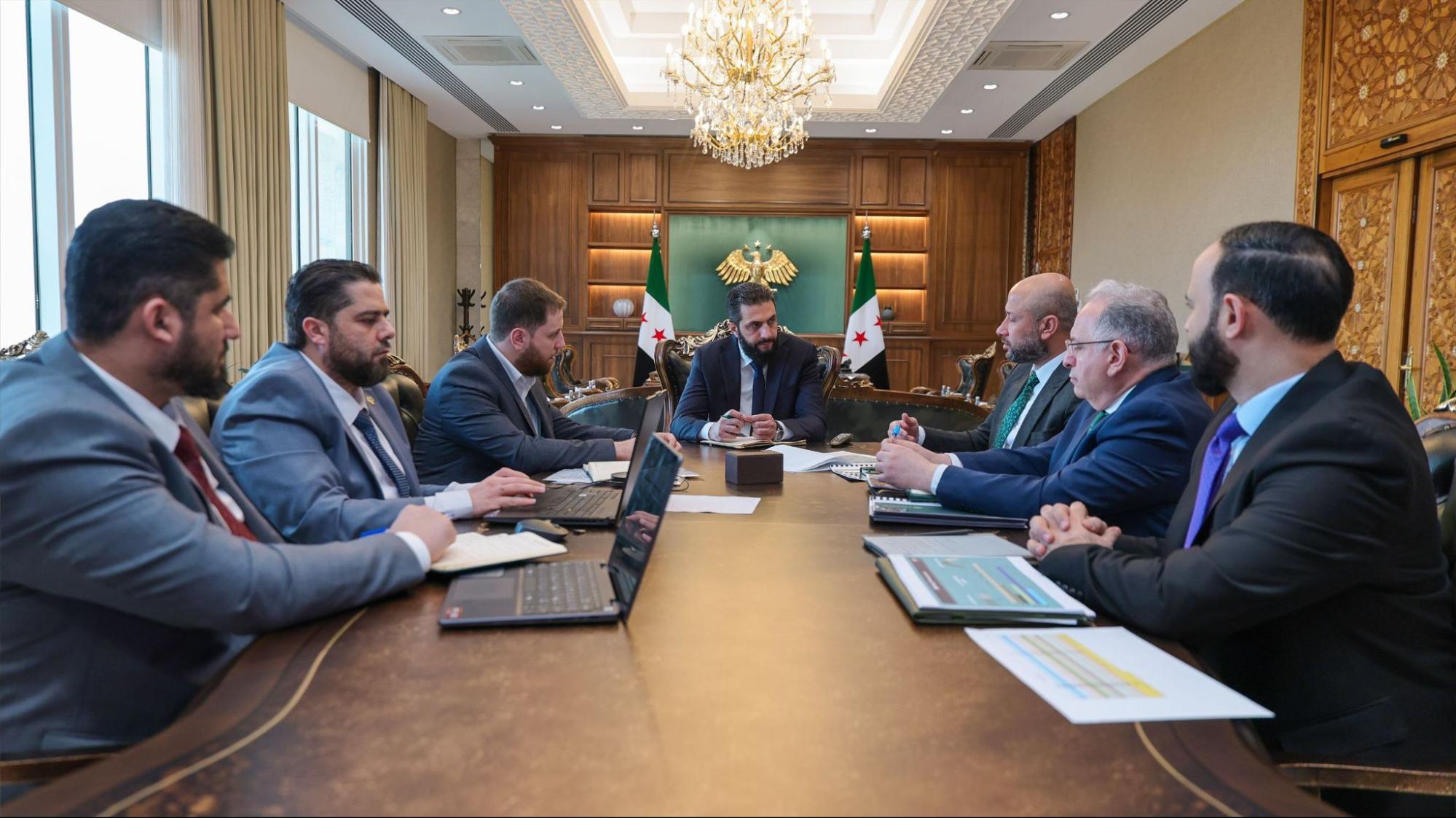
Real decision-making power in Syria’s new government appears to rest with a relatively small group of Hayat Tahrir al-Sham veterans, centered on Sharaa. Badawi is part of that group; Badr, the minister of transport, is not.
One of the best illustrations of how power has been vested in a few trusted individuals was one of the original members of Badawi’s National Committee for Imports and Exports, which includes a number of Hayat Tahrir al-Sham-linked figures. For several months, Basel al-Sweidan was simultaneously a member of Badawi’s import-export committee, deputy minister for agriculture, manager of a semipublic agricultural investment company, and head of the national Committee to Combat Illicit Gain. After a public outcry, Sweidan reportedly resigned from most of those roles in February to focus exclusively on his work on the Committee to Combat Illicit Gain.64 As head of that committee, he is responsible for brokering settlements with Assad-linked businessmen in which their expropriated assets are transferred to the Sovereign Fund.65
The Syrian state’s finances are opaque. The Sharaa government has only published a simplified “citizens’ budget” for 2026, not a full, detailed budget.66 The General Authority for Ports and Customs and other powerful, revenue-generating entities’ direct relationship to the Syrian presidency—with no real outside oversight—only further obscures Syria’s public finances.
Working Toward Recovery
The Sharaa government does seem motivated to achieve economic recovery for Syria, even if it is relying on its own, sometimes idiosyncratic means. Yet it faces a monumental challenge. The World Bank has estimated the cost of Syria’s postwar reconstruction at, conservatively, $216 billion—nearly ten times Syria’s projected GDP for 2024, $21.4 billion.67 According to various estimates, either two out of every three or nine out of every ten Syrians are living in poverty.68
The Sharaa government has promised a national recovery powered by private investment.69 Yet near-term prospects for foreign investment remain limited; most Western sanctions have now been removed, but would-be investors remain wary, given Syria’s fragile security situation, concerns over transparency and governance, and the country’s still mostly nonfunctional banking sector.70 The Syrian government trumpeted tens of billions of dollars in new investments last year, but, in practice, most announced investments failed to translate into real commitments.71
But while Sharaa will likely struggle to attract foreign investment in Syria, it may be more possible to establish the country as a hub for trade. Syria’s location—its geographic centrality, linking Europe and the Gulf—is among the country’s greatest assets. If the Sharaa government can secure the infrastructure that Europeans and Arabs need to diversify their trade routes and logistics networks, the resulting commercial flows through Syria could meaningfully contribute to the country’s recovery.
This type of development appears to be the project of Badawi’s General Authority for Ports and Customs, as well as related institutions such as the Ministry of Trade. The General Authority has promoted its efforts to create a smooth-moving, functional business environment, including by simplifying customs procedures and revamping port infrastructure and services.72 It has highlighted the resumption of transit trade, including via Syria’s maritime ports and overland from Turkey to the Gulf. And it has signed agreements with international shipping giants to develop and operate Lattakia and Tartous ports. The United States’ and Israel’s war on Iran has lent more momentum to Syrian government efforts to establish the country as a regional trade corridor, as the General Authority has facilitated Iraqi oil exports via Syria’s Banyas refinery and discussed Jordanian access to the country’s Mediterranean ports.
Badawi seems to want to make this all work. Foreign diplomats and others who have met with him report he comes off as professional and direct.73 “He’s very efficient, very business-minded,” a Western diplomat said.74 “The good thing happening on the management part in Syria is that it’s fast and centralized—the boss is the boss. If someone has a problem at a port, you call [the person responsible], and it’s fixed. If you have a problem in Lebanon, oh God, good luck to you. So, Syria—on that point—is doing much better. But there’s a question of sustainability. If things are being run by a small group, that’s not the most stable of systems. But for now, that’s probably an understandable trade-off.”75
Protectionist measures such as Decision 31 run counter to the Sharaa government’s aspirations to transform Syria into a conduit for trade. Yet the government has to balance competing interests; it also needs to rehabilitate Syria’s domestic trucking fleet, and to avoid domestic unrest.
The Sharaa government’s overall vision for Syria’s post-Assad economy remains unclear. The government still has not laid out a detailed economic plan or published a fully fleshed-out recovery program. Syrian officials have expressed, in general terms, a desire to open and liberalize Syria’s economy, and to break with the Assad regime’s more directed, socialist economic model.76 In January, for example, Nidal Shaar, the minister of economy and industry, told Syrian state media that the state’s “paternalistic” role in the country’s economy was finished.77 Yet that type of liberalizing agenda will also face resistance; it is worth noting that Assad’s program of liberalization led to some of the socioeconomic disparities and inequity that helped produce the country’s 2011 uprising.78
A Syrian businessman said that the country’s leadership still “needs to answer: What is the real identity of the state? Is it an open economy? An Oriental economy? Socialist? Islamist?”79 So far, there is no clear response.
Zero-Sum Choices
Syria’s transitional government, as it attempts to engineer economic recovery, faces a host of difficult choices. Many of those choices, even where there is a clear and compelling national interest, will still be zero-sum for the government’s domestic constituencies; some groups will win, others will lose. The government’s liberalization of imports, for instance, has been a boon to importers and consumers, but a disaster for local manufacturers who cannot compete with cheap foreign products.80
“With Decision 31 Until the Resurrection,” read the sign of one driver protesting near the border crossing with Jordan.
Syria’s truckers had been another constituency on the losing side of the Sharaa government’s liberalization agenda. Decision 31 has improved their position, and they understand they now have to defend it against competing economic actors. When the Damascus Chamber of Commerce criticized Decision 31 in February, admins on freight truckers’ main Facebook page responded: “My brother driver: You’re now at war with the traders.”81 After the Syrian government announced its trade agreement with Jordan in March, admins told truckers they needed to fight for Decision 31—their “right as Syrian drivers.”82 “With Decision 31 Until the Resurrection,” read the sign of one driver protesting near the border crossing with Jordan.83
“You have a collapsed people, and a collapsed state,” said Rahhal, the head of the Homs Freight Truck Drivers’ Association. “We want to help build it up. But not at just one side’s expense.”84
What’s more, these truck owners and drivers currently demanding their economic rights are challenging the Sharaa government from within its political coalition and social base. These drivers hail from areas that supported the opposition to Assad; they are not members of more marginal, easily ignored out-groups. And they have articulated their economic demands using symbols of Syria’s post-Assad political order, including the country’s new flag and attestations of support from Syria’s Arab tribes. “We’re all with you, Mr. President,” read another protesting trucker’s sign in March, “but your government is working against us.”85
Syria’s years-long economic implosion was a major part of what brought down Bashar al-Assad in December 2024, when the dictator’s exhausted military collapsed and rebels led by al-Sharaa’s militant group seized power. Assad’s fall opened up a new universe of political possibility in Syria, after decades of oppressive, suffocating dictatorship.
What the revolution didn’t solve, however, was the country’s stricken economy. This is the challenge the Sharaa government will face going forward: more and more urgent economic demands, including from constituencies within its social base. Syria’s economy is recovering—but not dramatically enough to really improve material conditions for most Syrians in the near term. And as Syrians struggle economically, they will appeal for relief from their resource-poor transitional government.
The Sharaa government, as it reaches for policy solutions, is unlikely to find easy, universally popular options. And in that sense, Decision 31—with all its complications and after-effects—is a good indication of what’s next.
This report is part of “Networks of Change: Reviving Governance and Citizenship in the Middle East,” a Century International project supported by the Carnegie Corporation of New York and the Open Society Foundations.
Header Image: Customs Enforcement patrols, from Syria’s General Authority for Borders and Customs, escort and secure transit tanker convoys arriving via the Al-Tanf crossing at the Iraqi border en route to the Baniyas Refinery, in a photo published by the government on April 1. Source: General Authority for Borders and Customs Facebook page.
Notes
- Syrian Refrigerated and Dry Transport Drivers (in Arabic, @avoLvofh), Facebook post, February 6, 2026, https://www.facebook.com/avoLvofh/posts/pfbid0F6w9TNePeLjwgbe35uiBdm3zBFayihq1dAss2kcwKL21t3ZcptoCMTsLhKpLwkQrl; Syrian Refrigerated and Dry Transport Drivers (in Arabic, @avoLvofh), Facebook post, February 6, 2026, https://www.facebook.com/avoLvofh/posts/pfbid0e8FGSdRrf41CYQyFNeWAU3Pks1LsFBnsUKkCR2uKtAofuD3gXbNaTAtcrZaqFNmel.
- Ahmed al-Tamimi, “Jordanian Truck Owners Call for Protection After al-Raqqa Assault” (in Arabic), Al-Ghad, February 7, 2026, https://alghad.com/Section-199/الغد-الأردني/أصحاب-الشاحنات-الأردنية-تطالب-بحماية-السائقين-بعد-اعتداء-الرقة-فيديو-2065881.
- Syrian Refrigerated and Dry Transport Drivers (in Arabic, @avoLvofh), Facebook reel, February 6, 2026, https://www.facebook.com/reel/1255792093337783/.
- “Syria’s Post-Conflict Reconstruction Costs Estimated at $216 Billion,” World Bank, October 21, 2025, https://www.worldbank.org/en/news/press-release/2025/10/21/syria-s-post-conflict-reconstruction-costs-estimated-at-216-billion.
- General Authority for Ports and Customs (in Arabic, @SyrGABC), Facebook post, February 7, https://www.facebook.com/SyrGABC/posts/pfbid02i1F7f1fU3JpGzieiF28p8269hM9mvaGbATBgtAgJgqhv7P4nGNnGpWhfG5ayFnjul.
- “Ground Sector: Freight Offices” (in Arabic), Syrian Arab Republic Ministry of Transport, archived October 2, 2023, https://web.archive.org/web/20231002154516/https://www.mot.gov.sy/web/road/spage.php?id=67&cid=14.
- “Technical Standards for Shipping [Directorate] and Its Role in Sustainability of Road Network” (in Arabic), uploaded to YouTube by Syrian Arab News Agency (@Syrianarabnewsagency-SANA), December 24, 2025, https://www.youtube.com/watch?v=jJ2GUFtqbFM.
- “Syrian Trucks Implement Trans-Loading Decision at Nasib Crossing” (in Arabic), Al Hadath Syria (@AlHadathSyria), Facebook reel, February 10, 2026, https://www.facebook.com/watch/?v=1877801169520941
- “Flow of Goods at Nasib Border Crossing After Implementation of Trans-Loading Decision” (in Arabic), uploaded to YouTube by Syrian General Authority for Ports and Customs (in Arabic, @SyrGABC), February 27, 2026, https://www.youtube.com/watch?v=OA0oeEk9IrI.
- “Breakthrough in Trucking Crisis . . . What Are Drivers’ Impressions?” (in Arabic), uploaded to YouTube by Syrian News Channel (in Arabic, @AlekhbariahSY), February 13, 2026, https://www.youtube.com/watch?v=jBWcuMB8JdU; “Truck Owners at Nasib Crossing: Preventing Entry of Non-Syrian Trucks Important Step Toward Reviving Ground Transport Sector” (in Arabic), SANA, February 15, 2026, https://sana.sy/economy/2404370/; “Decision to Ban Entry of Non-Syrian Trucks Has Positive Effect on Truck Drivers in Tartous” (in Arabic), uploaded to YouTube by Syrian Arab News Agency (@Syrianarabnewsagency-SANA), February 17, 2026, https://www.youtube.com/watch?v=G3UvncO40Ss; “Widespread Relief Among Truck Drivers After Implementation of Trans-Loading Decision on Borders” (in Arabic), uploaded to YouTube by Syrian General Authority for Ports and Customs (in Arabic, @SyrGABC), February 17, 2026, https://www.youtube.com/watch?v=-WXBJjdYjjU.
- Anas Juwaid, “Abu Aqoulah: Jordanian Diplomatic Movement to Contain Syrian Decision to Prevent Entry of Foreign Trucks” (in Arabic), Al-Rai, February 7, 2026, https://alrai.com/article/10942629/اقتصاد/أبو-عاقولة-تحركات-دبلوماسية-أردنية-لاحتواء-قرار-سوري-بمنع-دخول-الشاحنات-الأجنبية; “Surprise Syrian Decision Scrambles Movement of Freight with Jordan” (in Arabic), Al-Ghad, February 7, 2026, https://alghad.com/Section-199/الغد-الأردني/قرار-سوري-مفاجىء-يربك-حركة-الشحن-مع-الأردن-2065880; “Syria Organizes Entry of Trucks Through Crossings . . . And Lebanon Warns of Repercussions of Ban Decision” (in Arabic), An-Nahar, February 7, 2026, https://www.annahar.com/lebanon/politics/276162/سوريا-تنظم-دخول-الشاحنات-عبر-المنافذ-ولبنان-يحذر-من-تداعيات-قرار-المنع.
- Syrian Arab Republic Ministry of Transport (in Arabic, @SyrSMOT), Facebook post, February 11, 2026, https://www.facebook.com/SyrSMOT/posts/pfbid0bjfQaZRm7XVxYxKSHfYATfK6mNuWQDxx8pXQEdDZBQGbc63GzcMoozPsRCdWKLW6l; “Syrian Ministry of Transport Initiates Procedures to Organize Freight and Shipping Through Border Crossings” (in Arabic), SANA, February 11, 2026, https://sana.sy/economy/2399439/.
- Homs Freight Truck Drivers’ Association head Haitham Rahhal, interview with the author, Homs, January 2026.
- “Technical Standards for Shipping [Directorate] and Its Role in Sustainability of Road Network” (in Arabic), uploaded to YouTube by Syrian Arab News Agency (@Syrianarabnewsagency-SANA), December 24, 2025, https://www.youtube.com/watch?v=jJ2GUFtqbFM.
- “From Challenges to Solutions . . . Developing Transport Sector in Syria Digitally and Organizationally” (in Arabic), SANA, August 11, 2025, https://sana.sy/economy/2263297/.
- Trucking representatives, interview with the author, Homs, January 2026; “Tartous Maktab al-Dour and the Assadist Gang” (in Arabic), Syrian Refrigerated and Dry Transport Drivers (in Arabic, @avoLvofh), Facebook post, April 5, 2025, https://www.facebook.com/watch/?v=653048200808749.
- Homs Freight Truck Drivers’ Association head Haitham Rahhal, interview with the author, Homs, January 2026.
- Ministry of Transport representative Abdulhadi Shehadeh and Damascus Chamber of Commerce member Muhammad Hallaq, interviews with the author, Damascus and remotely, January and March 2026.
- Interview with the author, Damascus, January 2026. “From Challenges to Solutions . . . Developing Transport Sector in Syria Digitally and Organizationally” (in Arabic), SANA, August 11, 2025, https://sana.sy/economy/2263297/.
- Mazen Alloush (@mazen_alloush), Twitter/X status, July 15, 2025, https://x.com/mazen_alloush/status/1945113570305282514; “Syrian Truck Drivers Welcome Decision to Bar Entry of Egyptian and Saudi Trucks #Syrian_Arab_Republic #General_Authority_for_Land_and_Sea_Ports” (in Arabic), General Authority for Ports and Customs (in Arabic, @SyrGABC), Facebook post, July 16, 2025, https://www.facebook.com/watch/?v=1001903448514116.
- “Syrian Arab Republic Ministry of Transport” (in Arabic, @SyrSMOT), Facebook post, December 8, 2025, https://www.facebook.com/SyrSMOT/posts/pfbid02oc6mgj7cTsQxfhDUtE3JS4rVjg8iyqcmbNnBBWqUtNtS2QN5Pmf2roRaKvvUinAPl.
- Interview with the author, Damascus, January 2026.
- “For the Second Day in a Row, from Strike by Cargo Trucks in Syria . . . Group of Drivers in Talbiseh to Express Their Anger at Recent Decisions and Demand Their Rights and Fair Treatment” (in Arabic), Nidhal Ageidi (@ndal.kydy.2025), Facebook post, September 15, 2025, https://www.facebook.com/watch/?v=766182803067991; Syrian Refrigerated and Dry Transport Drivers (in Arabic, @avoLvofh), Facebook post, January 28, 2026, https://www.facebook.com/avoLvofh/posts/pfbid02vbW8tG5YxYV8bPUBsj9Z14NanreHKTRSxWvYzhQZP6vRCLJCBpHcXfAz8kJqhExNl; “Syrian Arab Republic Ministry of Transport” (in Arabic, @SyrSMOT), Facebook post, January 28, 2026, https://www.facebook.com/SyrSMOT/posts/pfbid0GCAU45ACJ1mhmZg8F9zWbfT83F3KuFBG3jumjkYYAcb9mspFibWEbya178X8xdqHl.
- Interview with the author, Homs, January 2026.
- Homs Freight Truck Drivers’ Association head Haitham Rahhal, interview with the author, Homs, January 2026.
- “Conversation with Truck Drivers; Their Demands: Reactivate Maktab al-Dour . . . And Cancel Free Transport Law” (in Arabic), “Nidhal Ageidi” (in Arabic, @ndal.kydy.2025), Facebook post, September 15, 2025, https://www.facebook.com/watch/?v=1687071325231459.
- Interview with the author, Homs, January 2026.
- “Syria TV Surveys Views and Demands of Freight Truck Drivers in Homs” (in Arabic), uploaded to YouTube by Syria TV (@SyriaTelevision), November 10, 2025, https://www.youtube.com/watch?v=4C3vucvbklc.
- Syrian Refrigerated and Dry Transport Drivers (in Arabic, @avoLvofh), Facebook post, September 13, 2025, https://www.facebook.com/avoLvofh/posts/pfbid0yeRyTZtDnGmEXpwmGgWqKQT9MzhJc8BLqMiLDonVVwYAx6QdCyhAkqzKQrGoyB3Yl.
- Syrian Refrigerated and Dry Transport Drivers (in Arabic, @avoLvofh), Facebook post, September 15, 2025, https://www.facebook.com/avoLvofh/posts/pfbid02qPypVDrKKdp6JtgYMa9cu9Ca959JYXFMkGxfnCcVTAWqo38VqNeY27h3ad8H6B6ql.
- Syrian Arab Republic Ministry of Transport (in Arabic, @SyrSMOT), Facebook post, September 17, 2025, https://www.facebook.com/SyrSMOT/posts/pfbid07rMA12J5EFhaRbMpHCanuw2gjTyDRZbktYKiyz8EEbGAXJ2BqKMpS2QcJaFv2oc4l; Syrian Refrigerated and Dry Transport Drivers (in Arabic, @avoLvofh), Facebook post, September 15, 2025, https://www.facebook.com/watch/?v=1042522127854232.
- Syrian Arab Republic Ministry of Transport (in Arabic, @SyrSMOT), Facebook post, September 23, 2025, https://www.facebook.com/SyrSMOT/posts/pfbid01Ht1kys1FaQkoQCH5nfYPbWjGA5w1DDvzc6sPTYLPuoLwYVxCdmpJAj6Xjdoa2vWl.
- “Meeting at General Secretariat of President of the Republic to Discuss Challenges of Ground Transport Sector in Syria” (in Arabic), SANA, September 28, 2025, https://sana.sy/locals/2295044/.
- Homs Freight Truck Drivers’ Association head Haitham Rahhal, interview with the author, Homs, January 2026.
- Syrian Arab Republic Ministry of Transport (in Arabic, @SyrSMOT), Facebook post, December 8, 2025, https://www.facebook.com/SyrSMOT/posts/pfbid02oc6mgj7cTsQxfhDUtE3JS4rVjg8iyqcmbNnBBWqUtNtS2QN5Pmf2roRaKvvUinAPl.
- Interviews with the author, Damascus, January 2026.
- Ministry of Transport representative Abdulhadi Shehadeh, interview with the author, Damascus, January 2026; “From Challenges to Solutions . . . Developing Transport Sector in Syria Digitally and Organizationally” (in Arabic), SANA, August 11, 2025, https://sana.sy/economy/2263297/.
- Interview with the author, Homs, January 2026.
- Syrian Refrigerated and Dry Transport Drivers (in Arabic, @avoLvofh), Facebook post, February 2, 2026, https://www.facebook.com/avoLvofh/posts/pfbid044QyG5eVszT1fTFByUJxjF6jS29hCwdZz6rURZJjB12PiHCQZsh81ht3LbrA7uLPl.
- Laith al-Jnaidi, “Syria . . . Government Decision to Create Land and Sea Ports Authority” (in Arabic), Anadolu Agency, December 31, 2024, https://www.aa.com.tr/ar/الدول-العربية/سوريا-قرار-حكومي-بإحداث-هيئة-للمنافذ-البرية-والبحرية/3438941.
- General Authority for Ports and Customs (in Arabic, @SyrGABC), Facebook post, November 23, 2025, https://www.facebook.com/SyrGABC/posts/pfbid024ueqWjfUGtXNYh3ea9VtjyBS79R4hgir6oYQYdBx4z5Z2UJKK4bUC7BSt2PqMigzl.
- Syrian Arab News Agency—SANA (in Arabic, @ Sana__gov), X status, December 31, 2024, https://x.com/Sana__gov/status/1874176272257175646; General Authority for Ports and Customs (in Arabic, @SyrGABC), X status, November 23, 2025, https://x.com/SyrGABC/status/1992670778480115972.
- “Quteiba Badawi” (in Arabic), Syrian Memory Institution, https://syrianmemory.org/archive/figures/65887f7b46b77c0001283582.
- “Transition Year: Syria’s Public Sector Faces Free-Market Purge and Centralised Control,” Syria Report, December 9, 2025, https://syria-report.com/transition-year-syrias-public-sector-faces-free-market-purge-and-centralised-control/.
- General Authority for Ports and Customs (in Arabic, @SyrGABC), Facebook post, November 23, 2025, https://www.facebook.com/SyrGABC/posts/pfbid024ueqWjfUGtXNYh3ea9VtjyBS79R4hgir6oYQYdBx4z5Z2UJKK4bUC7BSt2PqMigzl; General Authority for Ports and Customs (in Arabic, @SyrGABC), Facebook post, December 18, 2025, https://www.facebook.com/SyrGABC/posts/pfbid0JcUyroKsBcnb72Hb2Nf8gxrSiRUNxaeJE91L2yE5vVbPEgVPCMhtXSZJBPmWVa5cl.
- General Authority for Ports and Customs (in Arabic, @SyrGABC), Facebook post, November 24, 2025, https://www.facebook.com/SyrGABC/posts/pfbid032BBrAD1DwNJzysHr8em7bYeFe8juWopAqaQfuZm6iWC54Tu6U8Yh3zNe24ui8knal.
- Khaled Yacoub Oweis et al., “Syria’s Protectionist Move to Support Local Lorry Drivers Raises Cost of Business for Neighbours,” The National, February 17, 2026, https://www.thenationalnews.com/news/mena/2026/02/18/syria-lebanon-trucks-al-shara/.
- Interview with the author remotely, March 2026.
- “Slow Trans-Loading Deepens Freight Crisis at Nasib Crossing, Piles Up Trucks” (in Arabic), uploaded to YouTube by Syria TV (@SyriaTelevision), February 11, 2026, https://www.youtube.com/watch?v=51IePQk-_u0; Syrian Refrigerated and Dry Transport Drivers (in Arabic, @avoLvofh), Facebook post, February 7, 2026, https://www.facebook.com/avoLvofh/posts/pfbid09nfKeHy4ayeRpB84vSFLPVaC2zrrDsc9uvFpkWkaXcBUksRQ9UthnKhjKGaMXXNZl.
- “With Video—Protesting Syrian Authorities’ Decision . . . Lebanese Trucks Obstruct Movement at Masna’a [Border] Point” (in Arabic), An-Nahar, February 10, 2026, https://www.annahar.com/lebanon/society/276776/بالفيديو–احتجاجا-على-قرار-السلطات-السورية-الشاحنات-اللبنانية-تعطل-الحركة-عند-نقطة-المصنع; “Despite Protest by Lebanese Truck Owners . . . Damascus Affirms No Entry by Non-Syrian Trucks to Its Territory” (in Arabic), uploaded to YouTube by Al Jazeera Arabic (@aljazeera), February 11, 2026, https://www.youtube.com/watch?v=2fgDU6avNtg.
- “Jordanian-Syrian Discussions Today to Solve Truck Jam, Facilitate Ground Transport” (in Arabic), Al-Rai, February 8, 2026, https://alrai.com/article/10942734/محليات/بحث-أردنيسوري-اليوم-لحل-تكدس-الشاحنات-وتسهيل-حركة-النقل-البري; “Lebanese Delegation at Jdeidat Yabous, Decision to Block Road for Syrian Trucks Continues” (in Arabic), An-Nahar, February 11, 2026, https://www.annahar.com/lebanon/politics/277069/بالفيديو–وفد-لبناني-يتوجه-الى-جديدة-يابوس-لحل-الأزمة-الناتجة-عن-القرار-السوري-حول-الشاحنات; “Temporary Lebanese-Syrian Agreement to Organize Trucks’ Movement Through al-Masna’a for Seven Days; Tamer: Interim Organizational Step Preserves Organized Transport, Accords for Shared Interest” (in Arabic), National News Agency, February 12, 2026, https://www.nna-leb.gov.lb/ar/news/413247/اتفاق-لبناني–-سوري-موقت-لتنظيم-حركة-الشاحنات-عبر-معبر-المصنع-لمدة-7-أيام-تامر-خطوة-تنظيمية-مرحلية-تحفظ-انتظام-حركة-النقل-وتراعي-الم-2; Al-Mayadeen Lebanon (@mayadeenlebanon), X status, February 23, 2026, https://x.com/mayadeenlebanon/status/2025975942170980514.
- Damascus Chamber of Industry (@Damascus.Chamber.Of.Industry2014), Facebook post, September 15, 2025, https://www.facebook.com/Damascus.Chamber.Of.Industry2014/posts/pfbid02VVQjAusf5iWpmrA9n6sw4jaEAn1uckxwDmbwBTFhDUxNwuC4ZbP4hL3r2iHW4YcNl.
- Interview with the author remotely, March 2026.
- Interview with the author remotely, March 2026.
- “Damascus Chamber of Commerce” (@dcc9935), Facebook post, March 3, 2026, https://www.facebook.com/dcc9935/posts/pfbid02zAUgVJvc36CvMWmxYfzeiLSB8gSiVmDNm5fFiTmR1TzGk9BpDnYAqa514QeiFyx7l.
- “Flow of Goods at Nasib Border Crossing After Implementation of Trans-Loading Decision” (in Arabic), uploaded to YouTube by the Syrian General Authority for Ports and Customs (in Arabic, @SyrGABC), February 27, 2026, https://www.youtube.com/watch?v=OA0oeEk9IrI.
- General Authority for Ports and Customs (in Arabic, @SyrGABC), Facebook post, March 12, 2026, https://www.facebook.com/SyrGABC/posts/pfbid02HNmTsQwLBASLpJcrYjLNFFbzBwU8caJNUZtPxw5mVcCYeFJUxJo5xpmH98Zqi9eDl.
- Nadhem Eid, “With Video: 800 Percent Bill . . . Syria’s Electricity Ignites Anger of Street” (in Arabic),” Al-Modon, January 27, 2026, https://www.almodon.com/economy/2026/01/27/بالفيديو-فاتورة-ب-800-كهرباء-سوريا-تشعل-غضب-الشارع.
- Damascus Governorate (in Arabic, @DamascusGov1), Facebook post, March 17, 2026, https://www.facebook.com/DamascusGov1/posts/pfbid0YpjnJy2x6onx6Q2TWAoBXBAy7xLxaohiQrXSgPzrh9P8D14UpK8pVtxmt1bSnWX7l.
- Damascus Governorate (in Arabic, @DamascusGov1), Facebook post, March 22, 2026, https://www.facebook.com/DamascusGov1/posts/pfbid036K4AsYjGksosoSF52TgKFuyKiNR5gBa7oNsMyb57ZMjcB6EbjmE92hgNBEjsV3whl.
- Interview with the author remotely, March 2026.
- “President Sharaa Issues Decree to Create Sovereign Fund to Directly Implement Development and Productive Projects and Best Invest Resources” (in Arabic), SANA, July 9, 2025, https://archive.sana.sy/الرئيس-الشرع-يصدر-مرسوماً-بإحداث-الصن/.
- Amir Huquq, “Civil Society Discusses Strengthening Its Role in Syria During ‘Day of Dialogue’” (in Arabic), Enab Baladi, November 19, 2025, https://www.enabbaladi.net/784184/المجتمع-المدني-يبحث-تعزيز-دوره-في-سوري/.
- “Head of ‘Illicit Gain’ Gives Up Duties in Sovereign Fund and Iktifaa Company” (in Arabic), Zaman al-Wasl, February 17, 2026, https://www.zamanalwsl.net/news/article/174702/.
- “Committee to Combat Illicit Gain: Current Settlements with Businessmen Do Not Negatively Affect Course of Transitional Justice” (in Arabic), SANA, February 26, 2026, https://sana.sy/locals/2412750/.
- “Citizens’ Copy: 2026 Budget” (in Arabic), Ministry of Finance, April 9, 2026, https://docs.mof.gov.sy/citizen_budget_2026.pdf; “Public Budgeting in Transitional Syria,” Syrian Center for Policy Research, April 15, 2026, https://scpr-syria.org/publications2/public-budgeting-in-transitional-syria-surpluses-in-the-accounts-deficits-in-development-and-the-reproduction-of-inequality/.
- “Syria’s Post-Conflict Reconstruction Costs Estimated at $216 Billion,” World Bank, October 21, 2025, https://www.worldbank.org/en/news/press-release/2025/10/21/syria-s-post-conflict-reconstruction-costs-estimated-at-216-billion.
- “The Impact of the Conflict on Syria: A Devastated Economy, Pervasive Poverty and a Challenging Road Ahead to Social and Economic Recovery,” UN Development Programme, February 19, 2025, https://reliefweb.int/report/syrian-arab-republic/impact-conflict-syria-devastated-economy-pervasive-poverty-and-challenging-road-ahead-social-and-economic-recovery-enar; “New World Bank Report Highlights Syria’s Economic Challenges and Recovery Prospects for 2025,” World Bank, July 7, 2025, https://www.worldbank.org/en/news/press-release/2025/07/07/-new-world-bank-report-highlights-syria-s-economic-challenges-and-recovery-prospects-for-2025.
- Haid Haid, “Syria’s Obstacles to Investment Are Many,” Al Majalla, November 8, 2025, https://en.majalla.com/node/328351/business-economy/syrias-obstacles-investment-are-many.
- Economic researchers, interview with the author, Damascus, January 2026. See also Sunniva Rose et al., “Legacy Socialism, Vested Interests, Banks That Say No: Can European Investors Find Their Way into Syria?” The National, February 6, 2025, https://www.thenationalnews.com/news/2026/02/06/syria-rebuild-europe-investments-damascus-security-risks.
- “Syria Cancels Unimplemented Memoranda of Understanding” (in Arabic), al-Modon, September 14, 2025, https://www.almodon.com/economy/2025/09/14/سوريا-تلغي-مذكرات-التفاهم-غير-المنفّذة.
- “General Authority for Ports and Customs . . . 2025 Year-end Round-up” (in Arabic), uploaded to YouTube by Syrian General Authority for Ports and Customs (@SyrGABC), January 12, 2026, https://www.youtube.com/watch?v=Yp4yK0kty88.
- Western diplomats and Syrian businessman, interviews with the author in Damascus, Beirut and remotely, January and March 2026.
- Western diplomat, interview with the author remotely, January 2026.
- Western diplomat, interview with the author remotely, January 2026.
- “Analysis: The Pitfalls of the Free Market Approach,” The Syria Report, February 18, 2025, https://syria-report.com/analysis-the-pitfalls-of-the-free-market-approach/.
- “Return of the Jazirah and Infrastructure Rehabilitation . . . Minister of Economy and Industry Addresses Files in Exclusive Interview on al-Ikhbariyah” (in Arabic), uploaded to YouTube by Syrian News Channel (in Arabic, @AlekhbariahSY), January 30, 2026, https://www.youtube.com/watch?v=g1tSpdJmRiE.
- For example, see David Butter, “Syria’s Economy: Picking up the Pieces,” Chatham House, June 2015, https://www.chathamhouse.org/sites/default/files/field/field_document/20150623SyriaEconomyButter.pdf.
- Interview with the author, Damascus, January 2026.
- Sarah Dadouch, “Syrian Businesses Left with Unwanted Goods as Economy Stalls,” Financial Times, March 2, 2025, https://www.ft.com/content/5384fc95-54ed-4052-8e5c-94a79fd62090; Jihad Yazigi (@jihadyazigi), X post, February 10, 2026, https://x.com/jihadyazigi/status/2021269320874303969.
- Syrian Refrigerated and Dry Transport Drivers (in Arabic, @avoLvofh), Facebook post, February 21, 2026, https://www.facebook.com/avoLvofh/posts/pfbid0QHtPwPdHMowDfHDUa9WNoUJYD38hCpeGzEf4jn4vWGwRS2a5BU83EnvsyJovDNAPl.
- Syrian Refrigerated and Dry Transport Drivers (in Arabic, @avoLvofh), Facebook post, March 15, 2026, https://www.facebook.com/avoLvofh/posts/pfbid02gsiHKMWP6x6TpaAEeNXourWUnJbmADMhW5m8eHVeEmDTHY445Pg7x8GWDbZ4FEGTl.
- Syrian Refrigerated and Dry Transport Drivers (in Arabic, @avoLvofh), Facebook post, March 15, 2026, https://www.facebook.com/avoLvofh/posts/pfbid02nKz5vHDhfXdTD7QoSNyWZdyWvqQa44XmeLM2WzPHjeeK5Y7JazZrDYr3ZAH2nUfYl.
- Interview with the author, Homs, January 2026.
- Syrian Refrigerated and Dry Transport Drivers (in Arabic, @avoLvofh), Facebook post, March 15, 2026, https://www.facebook.com/avoLvofh/posts/pfbid02nKz5vHDhfXdTD7QoSNyWZdyWvqQa44XmeLM2WzPHjeeK5Y7JazZrDYr3ZAH2nUfYl.